You will find the Three training sessions here for your team to explore. Each session has a training guide to follow and all the readings and links for the session. It is recommended that teams allow 2 hours to work through the session. Please note it is important to read the training guides for each session PRIOR to the meeting as they have pre-readings to o for team members. If your team would prefer to read the attachments at the meeting, allow an extra 30 mins.
The three sessions are:
- Philosophy and Proactive
- Building Children's Agency
- Children as Influences of Change
I hope you enjoy them.
Carrie

This guided training session will take you through step by step proven effective reflective practices to engage your team in deep critical reflection. It comes with links to all the resources you will need to get started. This training will engage educators in reflective professional conversation included with guiding questions, activities, and readings and/or videos/podcasts. All included in the one price.
Philosophy and Practice session
Providing time for educators to reflect on the centre’s philosophy and current early childhood thinking is a critical element for professional growth. Using the readings from Loris Malagguzzi, Rights of the Chid and Understanding philosophy your team will be equip to critique, collaborate and review the cnetres philosohy and practice.
- Teacher: Admin User
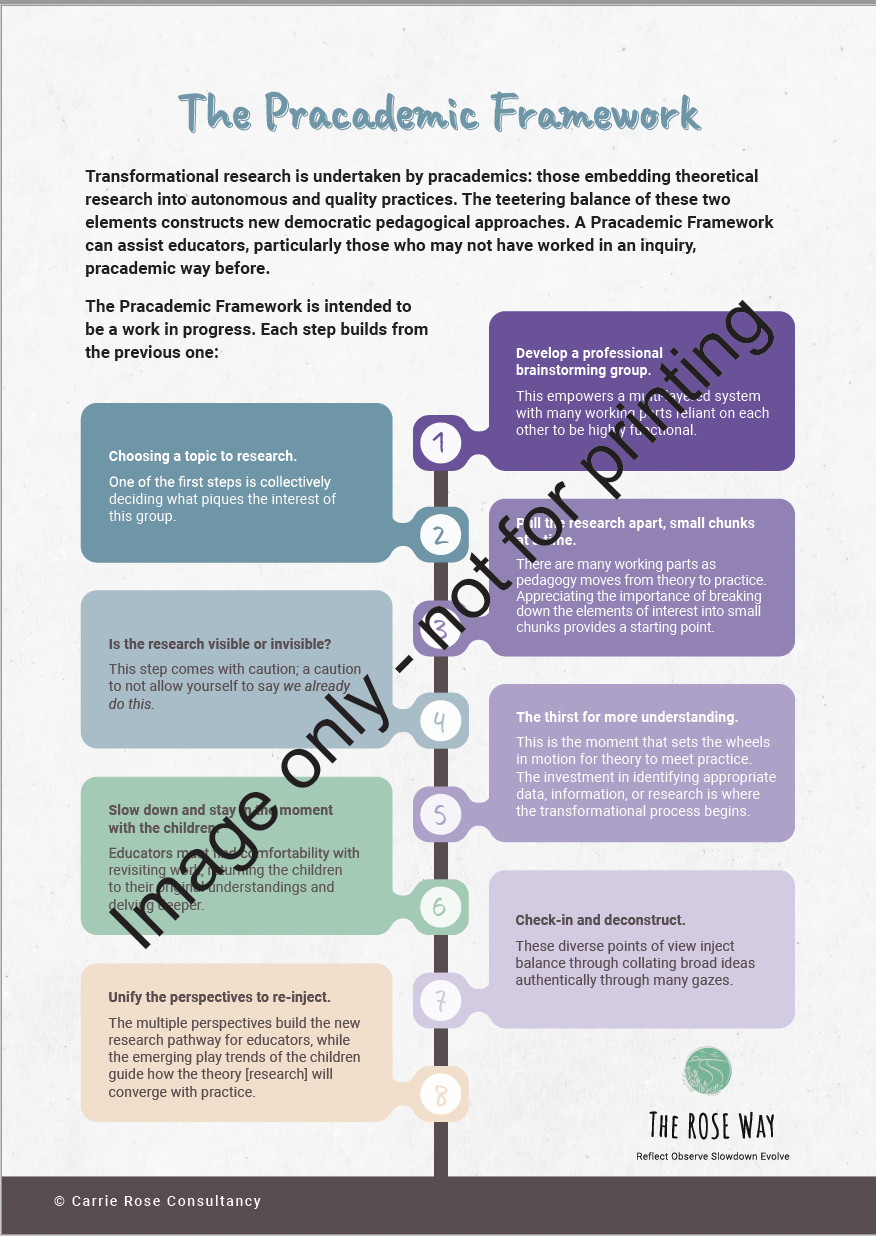
Dowload your own copy of the Pracademic Framework Poster featured in the book - Democratic Pedagogy in Early Childhood - Prcademics Narrative. Develop a team into a highly functioning, collaborating group using the 8 steps.
- Teacher: Admin User

This training will engage educators in reflective professional conversations with guiding questions, activities and readings and/or videos and challenging the 'whole group' strategy of learning and considering the importance of small groups of children in learning.
”If there is a single critical component to quality it rests in the relationship between the child and the teacher and the ability of the adult to be responsive. Being responsive to children and providing individualised attention can only be achieved through engagement in small groups." (Bowman et al, 2001 as cited in Wasik, B 2008).
- Teacher: Admin User

How do we know if the underpinning work of educators is having an impact within the community? Quality Area 6 shares the importance of connecting with the local community so where do you start?
This training will engage educators in reflective professional conversations with guiding questions, activities and readings and/or videos introducing the AEDC data as a basis of beginning.
- Teacher: Admin User
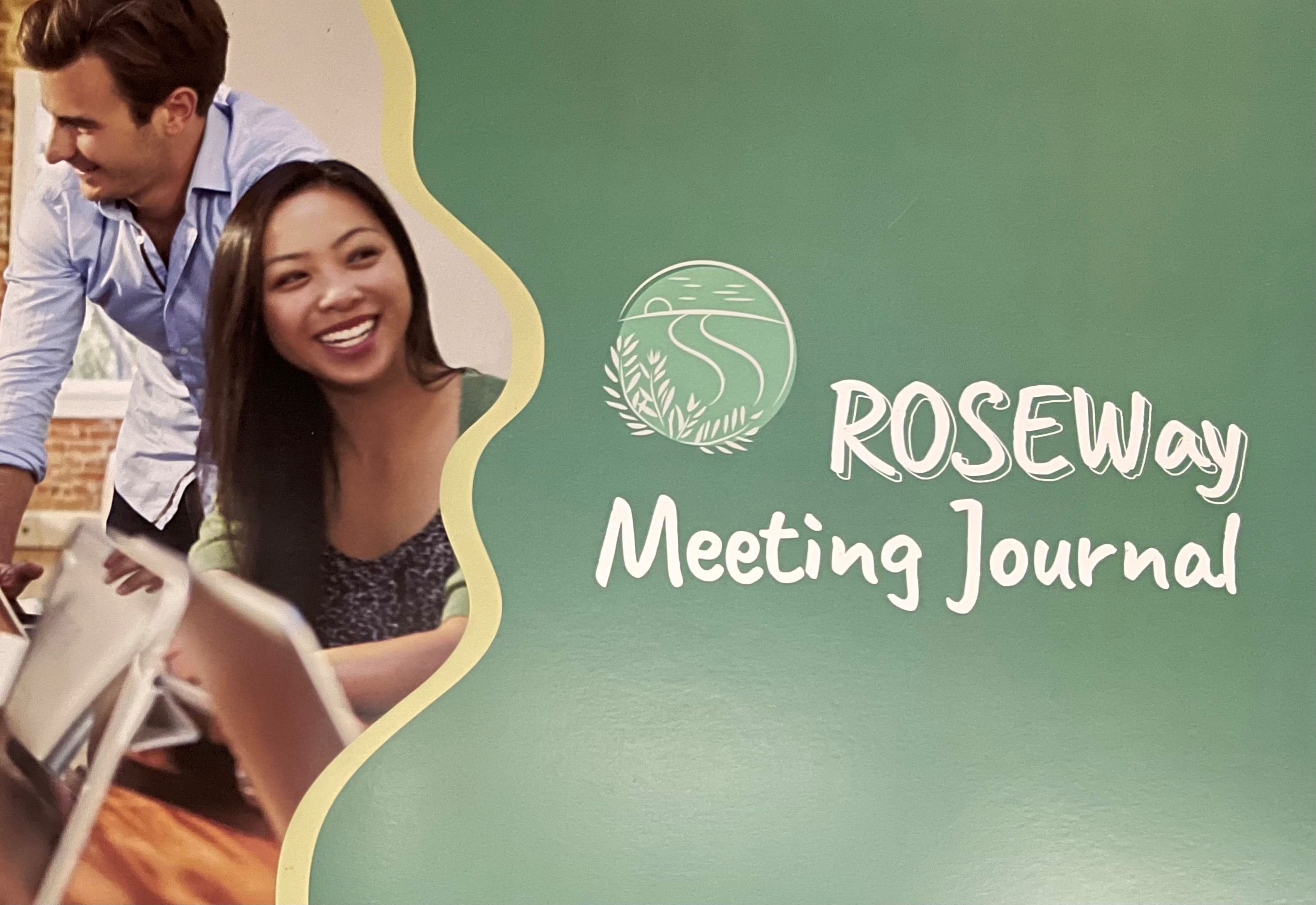
The Roseway Consultants have developed a team meeting journal for all to use. This journal captures all your monthly meetings in one place with 12 beautifully laid out pages . It also includes a practical example of high quality team meeting content.
As a bonus this package includes a facilitator's guide to support team members in keeping their interactions positive, productive and moving forward toward a common goal.
- Teacher: Admin User

This training will engage educators in reflective professional conversations with guiding questions, activities and readings and/or videos to explore the image of an educator in learning.
'Either education is a situation of research and this reserch produces new pedagogy, or it is the provision of a service that is delivered to young children, subjecting them in a message which is already completely prefabricated and codified in some way' Loris Malaguzzi (Schools of Reggio Emillia).
- Teacher: Admin User